
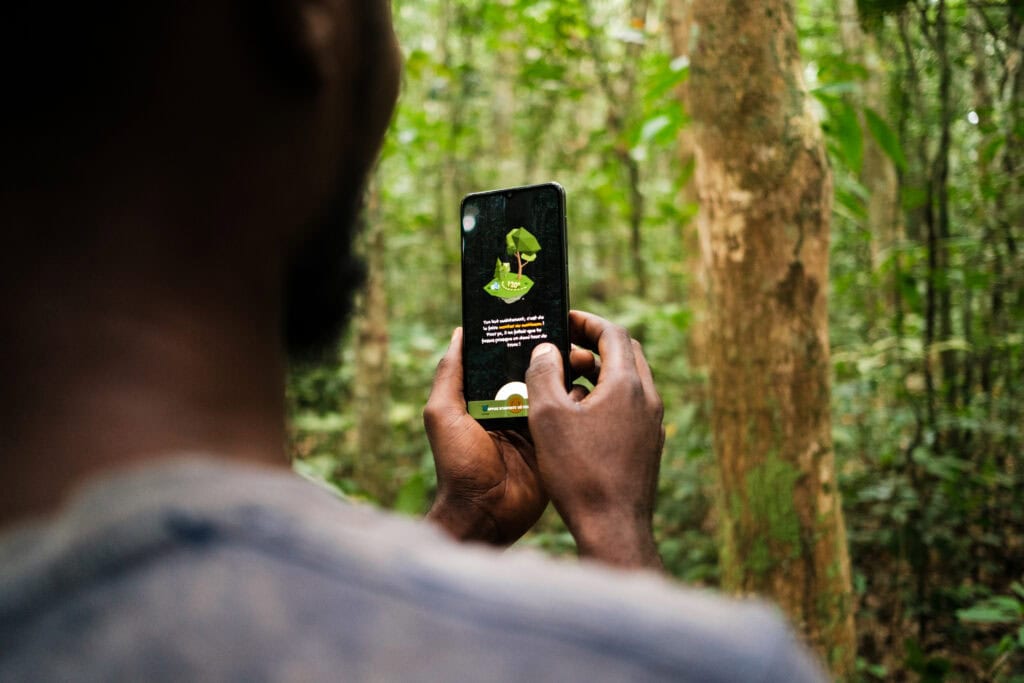
From next year, new EU rules will require companies to prove that commodities such as cocoa, coffee, and palm oil were produced with responsible practices. They’ll have to provide digital proof of their practices, which few smallholders are currently able to do.

The International Trade Centre (ITC) and the Food and Agriculture Organization (FAO) have teamed up to create a suite of free, public tools that farmers anywhere in the world can use.

Here’s how these tools are already being put into use in Kenya.

Long Miles Coffee buys their beans directly from Kenyan farmers. To sell their coffee to European buyers, they have to comply with the Regulation on Deforestation-free Products, known as EUDR.

Farmers do not have the resources to do that. To show how the digital tools work, ITC trained Kenyan agritech firm Agrisolutions Enterprises to use the new digital tools. Palladium Group, a global advisory firm, funded Agrisolutions Enterprises for the pilot project. That allowed Agrisolutions to mobilize 60 agents across Kenya to collect farm-level data from over 6,000 producers.

Smallholder farmers owning their data isn’t just good practice – it’s essential to their dignity. As a coffee producer working directly with these farmers, this farmer-controlled traceability gives us complete confidence that our 2025 launch of Long Miles Kenya from Mount Elgon, Western Kenya, is genuinely forest-friendly and community-centred

The agents used the FAO Open Foris Ground app to record detailed information about farm plots. The app maps plots, registers farm details, and gathers sustainability-relevant data – all offline.

The Ground App is a fantastic tool for companies like ours. It’s open, easy to deploy, and fits the realities of working in the field. Too often we’re approached with expensive, closed systems that shift the burden onto farmers and require them to give up ownership of their data
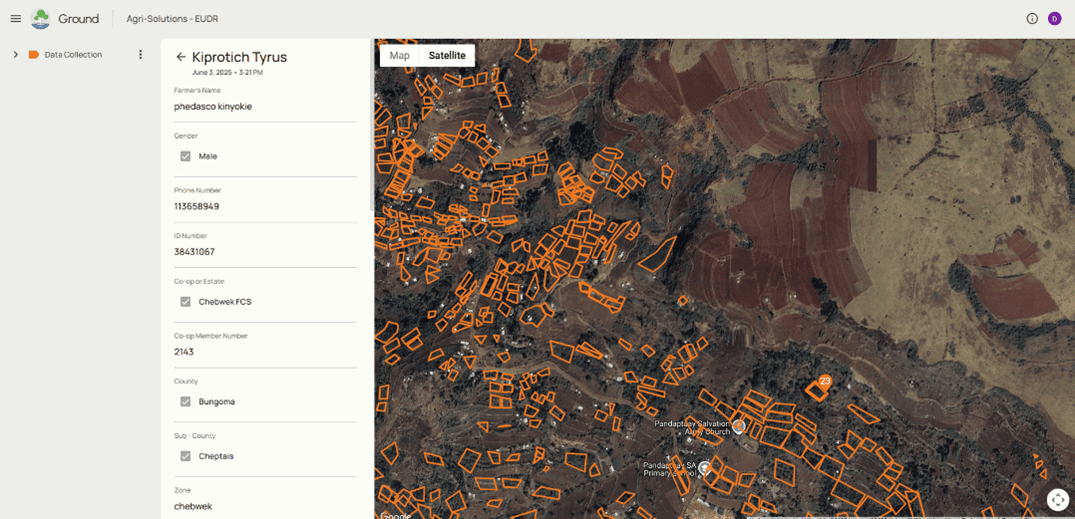
Over 6,000 farm plots digitally mapped by Agrisolutions Enterprises Ltd using FAO’s Open Foris Ground App in western Kenya. The data, owned by producers and cooperatives, is a vital step toward EUDR compliance and forms the foundation for deforestation risk analysis through FAO’s WHISP system. ©DFTG

Working through a model of inclusion

The effort was not only a technical exercise, but also a model of inclusion: training ensured that cooperatives and farmers understood what data was being collected, how it would be used, and that ownership of the data remains with them

When I was first told about the data collection, I was worried – who would use this information and why? But learning that I would have a copy of my own data, that it would sit with me in the ITC platform, and I could choose who to share it with – that changed everything.’

To identify potential deforestation risks, the data is being processed through WHISP (What’s in That Plot?). FAO created this monitoring and risk analysis engine to cross-references multiple datasets, looking at remote sensing, tree cover, historical land use, and national baselines. The result is a ‘convergence of evidence’ on whether a plot is at risk of deforestation, a critical step under the EUDR.
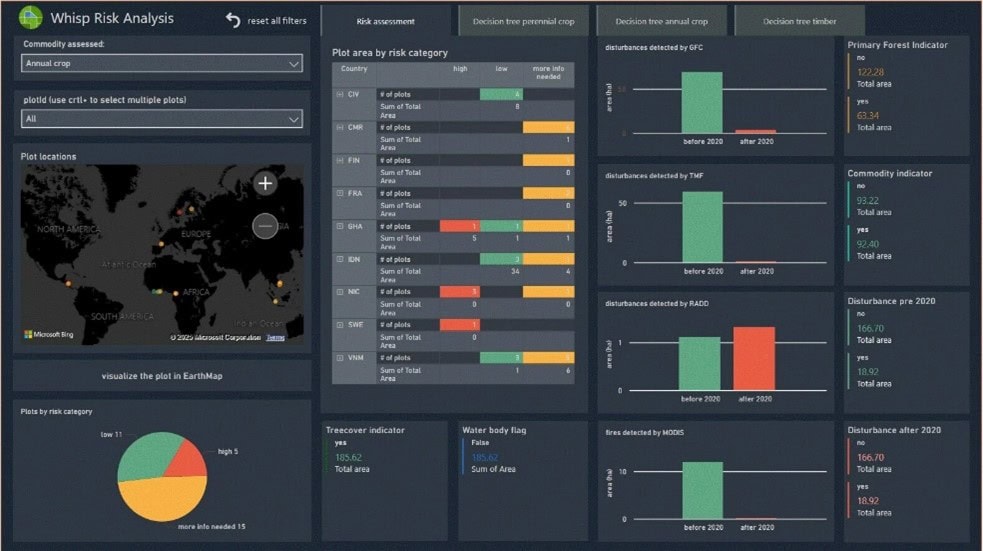
Sample output from FAO’s WHISP system, which cross-references multiple global datasets to detect deforestation risks across mapped plots. This convergence-of-evidence approach supports due diligence efforts under the E

That will allow Long Miles Coffee to keep selling to their European client, Johan & Nyström, which must submit EUDR compliance declarations.

We’ve worked with Long Miles Coffee for many years and deeply value their transparent, farmer-focused approach. We fully support this bottom-up model for compliance. It’s the only way to ensure EUDR doesn’t become a barrier for farmers but instead an opportunity for them to gain recognition and access to better markets.

So that more buyers can find verified producers, cooperative or exporters like Long Miles, ITC created the Deforestation-Free Trade Gateway. Producers can gain visibility, retain control over their data, and demonstrate compliance while benefiting from market access.
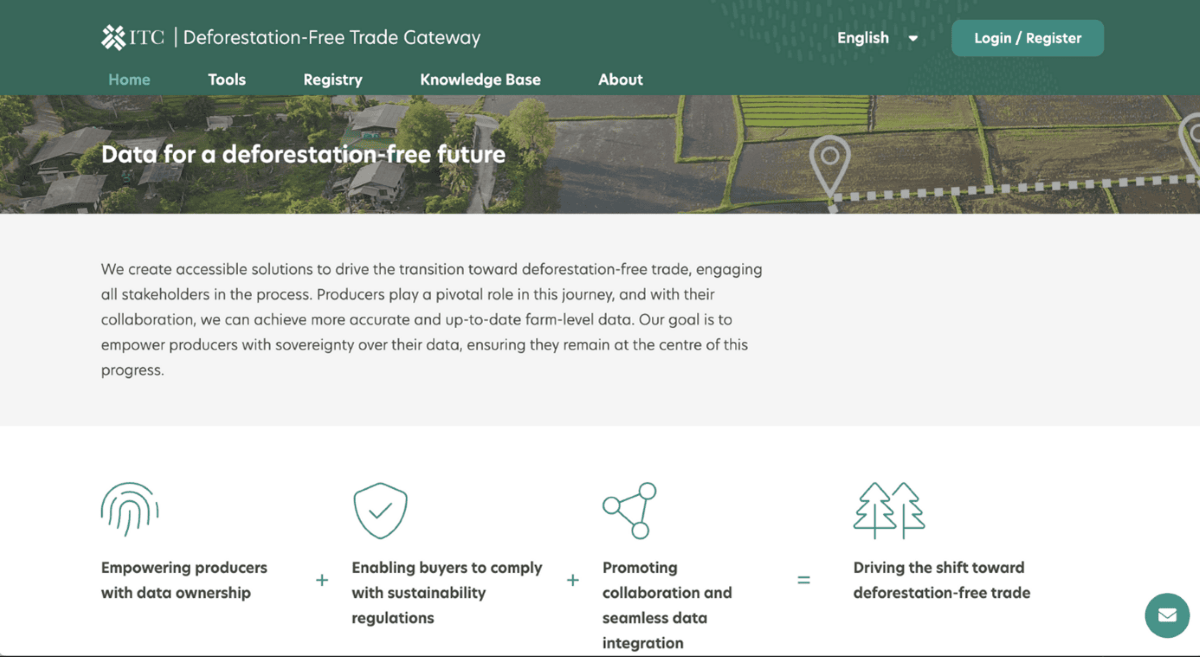
The Deforestation-Free Trade Gateway brings together partners to build simple, shared digital tools that support fair and sustainable trade. At its core, the Gateway puts small businesses first—making sure they have easy, affordable ways to show they meet sustainability goals.©DFTG

These solutions are not standalone; they already integrate with global systems like AgStack, a Linux Foundation project that assigns Geographical IDs to plots of land. This allows traceability to be more standardized, interoperable, and verifiable across platforms.

Shifting data costs away from farmers

To keep down costs for farmers, Kristian Doolan from Bridge.ong is looking at creating a system where buyers pay a small fee to keep supplier data updated and validated.

Data has become the new currency in sustainable trade but we’re still asking the poorest to pay the highest price,’ said Doolan. ‘Compliance systems that ignore producer costs at best are not sustainable and could risk becoming controlling or exploitive

ITC and FAO’s joint efforts represent more than a technical fix. They are contributing to laying the foundation for a digital public infrastructure so no one is left behind in the global push against deforestation.

The Deforestation-Free Trade Gateway puts smallholders’ interests at the centre. It enables all supply chain actors as well as public and private data partners to share, validate, and verify data. That ensures that all efforts are made visible, coordinated, rewarded, and aligned with sustainability standards and regulations.

About the initiative

FAO and ITC are working under a Team Europe Initiative, a collaborative effort of European development agencies. They’re also actively engaged with the Digital Integration of Agricultural Supply Chains Alliance (DIASCA), created to encourage the use of open-access tools that can talk to each other and that are easy for farmers to use

Post a comment

Your email address will not be published.